When Payday Becomes Public
With new pay transparency laws coming into effect, firms grapple with how to address employee gripes around unfair pay.

When Payday Becomes Public
NOTE: While this transcript has been reviewed, it may contain errors. Please review the episode audio before quoting from this transcript.
Jill Wiltfong:
How much do you make? Are we witnessing the birth of a pay transparency movement?
Tom McMullen:
This horse is out of the barn. Different people in the workplace have different views on this subject.
Jill Wiltfong:
What if this gets really messy?
Tom McMullen:
It could get messy. Part of it is leverage.
Jill Wiltfong:
Transparency could cause wage growth to actually slow down. Who's right here?
Tom McMullen:
Once you get there with transparency, there's usually no going back.
Colleague 1 (Ted):
Oh, hi there, buddy. What are the odds? I almost never see my colleagues on the weekend anymore. Adding a swimming pool, tennis court, and sauna to the property in under a month can be a real time suck. You know what I mean?
Colleague 2:
Uh, yeah, I totally get that.
Colleague 1 (Ted):
So, what brings you down here, fella?
Colleague 2:
Oh, I'm looking to buy one of these TVs.
Colleague 1 (Ted):
Oh, I see. Well, have you seen the ones in the clearance rack?
Colleague 2:
No, I'm actually thinking about getting the 77-inch version with a 4K OLED monitor. I think the fam is going to love it.
Colleague 1 (Ted):
Oh, my, my, my, my, my, my. Are you sure you can afford it?
Colleague 2:
What do you mean I can't afford it? Of course, I can.
Colleague 1 (Ted):
Well, I hate to say it, but to be brutally honest, I don't think you earn enough.
Colleague 2:
Now, wait a minute. How do you know how much I make?
Colleague 1 (Ted):
You didn't get the memo?
Colleague 2:
Uh, no.
Colleague 1 (Ted):
Our company is now disclosing salary ranges for job titles. Personally, I think you are way underpaid, but cheer up. I mean, who needs a TV anyway?
Colleague 2:
I do. I need a TV, and I'm getting this one right here. And I don't care that the price is… $2,000. For one TV? That can't be right, right?
Colleague 1 (Ted):
Well, that's if you don't want any of the extra features that most people get.
Colleague 2:
Gosh, well, listen, Ted. I gotta go.
Colleague 1 (Ted):
But hey, I thought you wanted to-
Colleague 2:
Changed my mind. See you at work.
Jill Wiltfong:
Hi, this is Jill Wiltfong, Chief Marketing Officer for Korn Ferry, and this is "Briefings," our deep dive into leadership.
How much do you make? It's the awkward question people sometimes get asked, but maybe not for much longer as multiple US states are making it mandatory to disclose salary ranges in job postings. Similarly, the European Union has adopted a pay transparency directive that will come into effect in 2026. And according to a new survey of more than 1300 organizations worldwide, 58% are already sharing with individual employees the firm's pay ranges for their job level. Another 28% say they're planning or considering to do so.
So, will they be ready once employees start asking why they don't make as much as somebody else? What if this gets really messy and demotivates a lot of folks? It's time to take a closer look at this bold new chapter in work life as we seem to be moving toward a time when payday becomes public.
Here today to speak with me on this intriguing topic is Tom McMullen, a Senior Client Partner in Korn Ferry's Total Rewards Practice.
Hi Tom, thanks for being here.
Tom McMullen:
Hi, Jill. Great to be with you.
Jill Wiltfong:
Tom, let's start with all these salary transparency laws. Are they going to fundamentally change a company’s reward strategies or have they already?
Tom McMullen:
In a minimum, I think it's going to change what organizations do in terms of the type of pay information that's disclosed, how that information is disclosed, who's going to be disclosing that information. Does it go straight to employees? Does it go to employees via managers or through HR? And I think at a minimum, there's a big education and capability building effort that organizations need to help their managers with how to disclose these reward strategies. And this is the big focus for organizations now.
Jill Wiltfong:
How do these laws prevent firms from giving ranges like a dollar to a million dollars, and effectively gaming the system? Is there governance in place to prevent something like that from happening?
Tom McMullen:
The laws are such to where it says that organizations essentially have to provide good faith salary ranges. Beyond that, there's not a lot of prescriptions. And to your point, there have been some organizations posting $100 to $400,000 in salary range, which, you know, is effectively not a salary range. And the media has been very good at calling those organizations out.
Jill Wiltfong:
Yeah, and we mentioned off the top, a lot of companies are already doing this, right?
They're voluntarily, even in states or countries and regions where it's not required, they're voluntarily kind of stepping up and sharing. Is it asking for trouble to kind of jump the gun and move into this voluntarily? Does it leave employees questioning more things than maybe companies are ready for?
Tom McMullen:
Yes, but I think, you know, this horse is out of the barn, as they say in Kentucky. You know, even though it's not the law of the land in a majority of the states, these transparency laws do cover a quarter of the US population. It could get messy. I mean, I think it can be problematic for organizations that have been opaque with their practices in the past to start opening that up. And it invites those basic clues from employees. Why am I paid low? Why is that job higher than mine? You've gotta be prepared to answer those questions or at least equip your managers in helping employees understand the company's practices.
Hannah Williams:
Chris, what do you do?
Interviewee 1:
I work in IT.
Hannah Williams:
How much do you make?
Interviewee 1:
About $70k.
Interviewee 2:
I work in economic development.
Hannah Williams:
Okay, and how much do you make?
Interviewee 3:
I make about a little over $100,000.
Hannah Williams:
I'm hoping that young workers, people that just graduated are gonna see this and realize, "Shoot, I should be negotiating my salary. I should be doing market research. I should be figuring out how much I make, and if I'm being underpaid, I should ask for more."
Jill Wiltfong:
That's Hannah Williams whose TikTok channel's "Salary Transparent Street" has an amazing 1.3 million followers, as of this recording. Tom, are we witnessing the birth of a pay transparency movement?
Tom McMullen:
Yeah, I think it's already here. You know, the regulatory side that we've chatted about, I mean, that's a function of where society is in general, right? So, the social, political and economic environments have caused governments and legislatures to take this on to be more transparent.
Jill Wiltfong:
Yeah, which actually leads me to my next question that really surprises me - that a large portion of firms worldwide really haven't developed or implemented a strategy around pay transparency at all. Why is that?
Tom McMullen:
If the organization and its leaders know something that you, the employee, doesn't, that gives them an advantage and leverage. So, if the applicant or the employee doesn't have access to the pay range information and you do, that gives the organization more of a chance to be flexible in what job they might be bringing you in. They might be able to flex more low or high in terms of the salary information. So, part of it is leverage. I think also companies that are not transparent may not be transparent because they don't have solid reward frameworks and structures in place. I like to tell clients, if you've got a good reward story to tell that story, shout it from the mountaintops. If you don't feel good about that story or if it's highly discretionary or situational, then you probably need to work on improving the content of that story, and the structure, and the framework of that story.
Narrator:
A growing group of economists believe public wage transparency may erode the bargaining power of individual workers.
Bobby Pakzad-Hurson:
The firm can now say to you, if there's pay transparency, "You know, I'd love to pay you more money than you're making because you're a great worker, but I can't pay you anymore. And the reason I can't pay you more is as soon as I pay you, you know, a little bit more than what other people are making, they're all gonna see that and they're gonna come, you know, breaking down my door, asking for a raise."
Jill Wiltfong:
That's Bobby Pakzad-Hurson, an Assistant Professor of Economics and Entrepreneurship at Brown University. Is it actually possible that all this openness about pay could mean lower salaries for some? And what do leaders do when an employee asks why they make less than the salary listed in a job posting? See how sticky all this can get? We'll get the answers and more after the break.
Rupak Bhattacharya:
Hi, and welcome to the break. I'm Rupak Bhattacharya and here's a look at what else is happening in business from Korn Ferry's This Week in Leadership.
Speaker:
We may have hit the peak interest rates in this economic cycle.
Rupak Bhattacharya:
Leaders are starting off the year a little more optimistic than some have predicted. Last month, of course, the US Federal Reserve suggested that it won't continue raising interest rates, which has smart firms hoping to do some deals at cheaper debt rates in the near future. The bottom line is it's looking like a soft landing for the economy in 2024.
Speaker:
Research shows dogs in the office can lower stress levels in workers, but they can also present some challenges.
Rupak Bhattacharya:
There's a hot new debate in the UK corporate world, and it's all about dogs in the office. Pet owners have long been howling to bring in their canine companions, and a new survey now finds that 52% want to bring in their dogs. However, some experts say culture and the personal preferences of others are at stake. Who will win this dog fight?
Speaker:
Each and every day, American companies, critical services are facing persistent cyber-attacks.
Rupak Bhattacharya:
At a time when cyber-attacks are increasing, a new study suggests that in the year following an attack, 13% of cybersecurity leaders reported staff reductions. Experts say that in many cases, the Chief Information Security Officer, the public face of a company's defense efforts, is among those fired.
For more insights on business and leadership, head to kornferry.com/insights. Now, back to Jill and our episode on 'When Payday Becomes Public'.
Walt Disney:
Within a few weeks, Dick was at Endicott where he would spend about four months learning the mass of technical information needed by an IBM Customer Engineer. Equally important, he would learn about IBM, about the spirit that motivates its people in their relationships with customers and with each other. With more than 3,500 new customer engineers being hired each year, more and more opportunities are opening for advancement into management.
Jill Wiltfong:
We're back and we're speaking with Tom McMullen from our Rewards Practice about pay transparency.
Tom, that clip was from a 1956 educational film about IBM and it was voiced by none other than Walt Disney himself.
What's funny is our fabulous Executive Producer's father actually worked in that very division of the company, but he tells me he had no clue what his father's salary was, and he didn't dare to ask. Why was it so hard for people to discuss salaries back then and why is it still hard?
Tom McMullen:
It is still hard. And I think a big part of it is generational differences in the workforce. You know, I'm a baby boomer. I don't share my salary with anyone. The first company I worked for out of college, it was a firing offense if you shared your compensation with anyone that was in the employee handbook. While the baby boomers are not comfortable and the new generations are comfortable, you have to respect that different people in the workplace have different views on this subject, and leaders are not all in the same place. In fact, you've got a lot of company leaders that are these conservative baby boomers on this topic, right?
But the pendulum is definitely shifting towards transparency. And once you get there with transparency, there's usually no going back.
Jill Wiltfong:
Before the break we played a clip from an economist who said that transparency could cause wage growth to actually slow down. But one of our surveys has over half of leaders saying it will likely cause wages to increase. Who's right here, leaders or economists? Where would you put your money?
Tom McMullen:
It's a tougher question over the long term. I think it will normalize, but at least in the short to midterm, I think all of this will probably cause a bit of a spike in wages just due to transparency and pay equity remediation.
Jill Wiltfong:
It's certainly helped me to realize how complicated it is, right? It's not so simple as "just let everybody know." There's a lot of nuances that go into this. So, thank you for your perspective, and your tips and ideas on kind of how companies can tackle this moving forward.
Tom McMullen:
Yeah, it was a pleasure. Thank you.
Jill Wiltfong:
The Executive Producer of "Briefings" is Jonathan Dahl. Today's episode was produced by Rupak Bhattacharya, Nadira Putri and Teresa Allan, and edited by Jaron Henrie-McCrea. It contains reporting by Russell Pearlman, Arianne Cohen and Peter Lauria.
Our video segment contains original artwork by Frazer Milton, Hayley Kennell, Jonathan Pink and Sasha Kostyuk.
Don't forget to read our magazine, available at newsstands and at kornferry.com/briefings. That's it for Korn Ferry's "Briefings". I'm Jill Wiltfong. We'll see you next time.
Why is that? Because they need to work for Korn Ferry. Ah, the tragedy. Can you imagine? Jill, you're gonna have to write us a check.
When you're uncertain, just write Jill Wiltfong a check.
Subscribe to series:



Podcast Guest
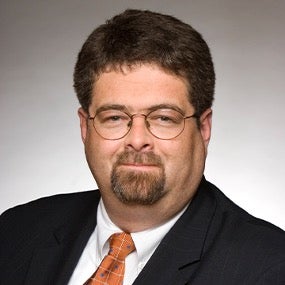
Tom McMullen
Senior Client Partner, Rewards Practice
Korn Ferry
Tom leads our Total Rewards practice in North America as well as the US Pay Equity practice. He also co-leads the North American Performance Management practice for our organization.