A New Era of Micromanagement
Eight in 10 firms now plan to track office attendance and even sick days are being questioned. Two experts share why firm leaders may feel this is necessary.
A New Era of Micromanagement
NOTE: While this transcript has been reviewed, it may contain errors. Please review the episode audio before quoting from this transcript.
[“1984” Movie]:
Take your places, please.
Jill Wiltfong:
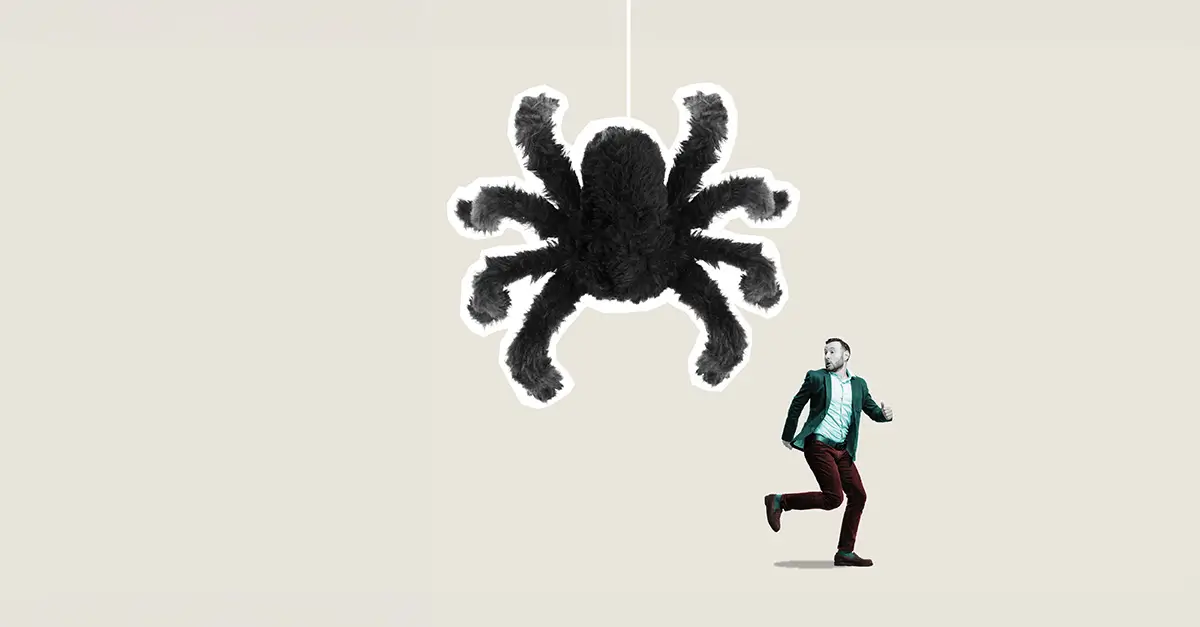
Is your company micromanaging you to death?
Dan Kaplan:
It's such a complicated issue. We also are dealing with a workforce that is probably as disengaged as it's ever been.
Jill Wiltfong:
Don't leaders have a right to be a little bit upset?
Erika Duncan:
They might not mean to be a micromanager, but it can be perceived that way. Here's the goal, here's what we need to achieve. I'm less interested in how you're achieving.
[“1984” Movie]:
You are not trying.
[Employee 1]:
All right, great work everyone, see you Monday.
[Manager of employee 1]:
Hey champ, I'm going to need you to stay on and finish up that quarterly report.
[Employee 1]:
But didn't we say this wasn't needed until next Friday?
[Manager of employee 1]:
I know, but it'll just feel better knowing it's in my inbox. Don't worry, it'll only take a couple hours and it's the last thing I'll ask for, I promise.
[Employee 1]:
Okay.
Happy birthday son. Be sure to make a wish when you blow out the candles. Hold on, it's him. Hello?
[Manager of employee 1]:
Hey buddy, how's it going? Did you happen to see my notes in email?
[Employee 1]:
Hi, no, I haven't, but I'm just celebrating my son's birthday, so can this--
[Manager of employee 1]:
I was thinking we should go with font size 11 instead of 12. I know it's a Saturday, but it'll only take a minute to revise.
[Employee 1]:
Morning honey.
[Employee 1’s wife]:
What was that? Shh, I think someone's broken into the house.
[Employee 1]:
Lemme check it out.
[Manager of employee 1]:
Hey pal, hope you don't mind. The back door was open, so I came in. Wanted to make sure you were prepped for the meeting tomorrow, big client and all.
[Employee 1]:
You are in my kitchen, and did you just make coffee?
[Manager of employee 1]:
Can't start my day without it. And you're out of cream.
Jill Wiltfong:
Hi, this is Jill Wiltfong, Chief Marketing Officer for Korn Ferry and this is Briefings, our deep dive into leadership. Is your company micromanaging you to death? For most people, it's bad enough if the boss is all over you, but now many firms have made regular check-ups part of their company protocol. For example, eight in ten firms plan to use technology to track office attendance this year. Even sick days are being questioned. One quarter of managers said in a survey they think, "Sick workers are exaggerating." And another one third are, get this, requesting doctor's notes as proof. Some HR pros say it's all raising an enormous trust issue that can infuriate workers. For their part, corporate leaders say they need to respond to a recent decrease in productivity and to employees slacking that began with the rise of remote work. Whatever the case may be, let's take a closer look at this new era of micromanagement.
With us now is Dan Kaplan. As a Senior Client Partner in Korn Ferry's CHRO practice, Dan hears a lot from both sides, workers and leaders, about the concern over workplace trust. Dan, well, we trust what Dan has to say. So, Dan, thank you for joining me.
Dan Kaplan:
Thanks Jill, excited for the conversation. Happy to be here.
Jill Wiltfong:
Dan, between mid-2021 and the middle of last year, worker productivity slipped by 2%. That was the largest drop in seven decades. It's gone up since, but how much of that do you think was causing all this so-called helicopter bossing?
Dan Kaplan:
I think it's undoubtedly playing a role. I think it's such a complicated issue. The productivity measures we use are a little bit outdated. It's hard in a computer-generated world to really measure productivity the way that we used to 40 or 50 years ago when people were in factories and in plants. We also are dealing with a workforce that is probably as disengaged as it's ever been and we're not spending enough time talking about poor managers and poor leaders in corporate America and in corporate in general. I think all those factors are playing a part.
Jill Wiltfong:
Talk a little bit about this disengagement and how much of it is a technology issue versus how much do you think this is just more our ways of working today?
Dan Kaplan:
So, I think it is a way of working that is going to take generations to fix. Covid was a huge reset for the world, and it led to people working from home. People found that you actually could do your work in fewer hours, not have to commute, still get paid even if you were, you know, golfing during the day or going to the gym and people don't really want to give that back. We've seen quiet retiring. We've seen quiet quitting. All of it speaks to people just less engaged with the company.
[Employee]:
I was charged with doing the inventory every week and I, you know, would turn in my inventory and she said, "No, this isn't good enough. I don't want you to count boxes of paper clips. I want you to tell me how many paperclips are in each box.” Which was just sort of a humiliating and pathetic task.
Jill Wiltfong:
Dan, that's a former employee speaking about her horrible ex-boss. Between making workers count paperclips and not believing when they call in sick, are firms taking worker surveillance too far?
Dan Kaplan:
I think they are, and I think they're using it as a bit of a band aid for a challenge across all corporate of poor leadership. And when everyone was in the office and everyone was still marching to the old drum of working really hard, obsessed with earning as much as they could, obsessed with getting ahead, poor managers didn't get in the way. Now as we're dealing with remote workers, hybrid workers and a generation that is somewhat disenfranchised, the average leader in corporate just doesn't have the tools to lead.
Jill Wiltfong:
Hmm, interesting, so in this kind of tightening job market, I imagine you've got some leaders who feel like they can put their foot down a little bit harder than maybe even they did in the past because it's hard to leave right now. It's hard to find a job.
Dan Kaplan:
It is, this labor market is playing a part, although from month to month we don't know if the labor market is tightening or loosening and so there has been a back and ebb and flow back and forth of who is wielding the power. But we are seeing a general frustration and agitation on both sides where employees are saying, "You trusted us early in covid, we delivered, now you're not trusting us anymore." And companies saying, "We trusted you to perform and now we think you're slacking, and we haven't yet found a middle group."
[Dave Ramsey]:
If you aim at mediocrity and you think playing Call of Duty four hours a day while you call, while you're supposed to be doing work from home is a good idea, you're going to be nothing in your life. If you show up at work and work while you're at work, you stand out.
Jill Wiltfong:
That's a famed radio personality, Dave Ramsey, speaking to some of the concerns that leaders have, and he is not entirely wrong. Half of workers admit to watching up to five hours of TV shows during work hours. Some do midday golf games; those rose a shocking 278% post pandemic and some people are working two jobs against company policy. So, don't leaders have a right, Dan, to be a little bit upset and a little bit cautious in this environment?
Dan Kaplan:
They do for sure and we're seeing abuse at every level. People have gotten used to having the freedom, they're not going to give it back and the biggest impact that Covid had, especially because it's lasted so long, is people are just deciding they don't care as much about getting ahead. They don't care as much about the corner office. They don't care as much about earning as much money as maybe their parents wanted them to. Trying to regulate it through technology isn't necessarily the way there. It's not going to rebuild trust, but no one really has the answers just yet.
Jill Wiltfong:
And Dan, is no one just focusing on just basic business outcomes? Like getting the work done as we've scoped it and not worry so much about how it gets done. Is it, could it be that simple?
Dan Kaplan:
In some way, I think it actually is that simple, Jill, you have people saying, I get my work done so I can go play Call of Duty for five hours. I got my work done; I can go play an extra round of golf. What was missing is in the past it wasn't about just getting your work done, it was about getting the work done as quickly, as efficiently as possible, and then people wanted to do more. They wanted to take on more, they wanted more responsibility. They wanted to show that they deserved a promotion. That has kind of leaked out of the corporate culture today.
Jill Wiltfong:
All right, well Dan, thank you for coming on and for giving your perspective. Obviously, we've seen a case for and against modern micromanaging and it will be very interesting to see how this all comes to a conclusion. When we come back, we'll talk about the micromanagers themselves and the people caught in the middle of all of this, which is HR. They have the power to help workers adjust smoothly to stricter monitoring or they can make things even tougher. Which way will it go? Stay tuned.
Rupak Bhattacharya:
Hi and welcome to the break. I'm Rupak Bhattacharya and here's a quick look at what else is happening in business from Korn Ferry's This Week in Leadership.
[Kevin Eikenberry]:
The end of the year was stronger than we thought. We ended up having record earnings on the bottom line.
Rupak Bhattacharya:
Of the companies that have reported 2023 fourth quarter earnings, more than eight in 10 have beaten analysts’ estimates. That's the highest percentage in two years. Experts say this trend in mis forecasting could end up harming organizations and investors over the long run by driving up stock prices and creating an artificial bubble.
[Kevin Eikenberry]:
Even if 2024 is shaping up to be a relatively healthy labor market, by recent comparison, it doesn't feel quite as strong.
Rupak Bhattacharya:
Despite unemployment being near a record low, a recent survey found that half of those looking for a job were completely burned out by the process. It turns out many companies have become shy about hiring of late, plus easy apply AI tools have created a deluge of candidates for companies to pick from.
[Kevin Eikenberry]:
Millions of people are putting their coworkers at risk by going to work sick.
Rupak Bhattacharya:
Sneezing and coughing at work are back and so apparently is hiding illnesses. After two pandemic years in which merely coughing in public was verboten, some 75% of workers now admit to concealing an illness. However, experts say companies with flexible working policies are less likely to have these issues. For more insights on business and leadership, head to kornferry.com/insights. Now back to Jill and our episode, A New Era of Micromanagement.
[Kevin Eikenberry]:
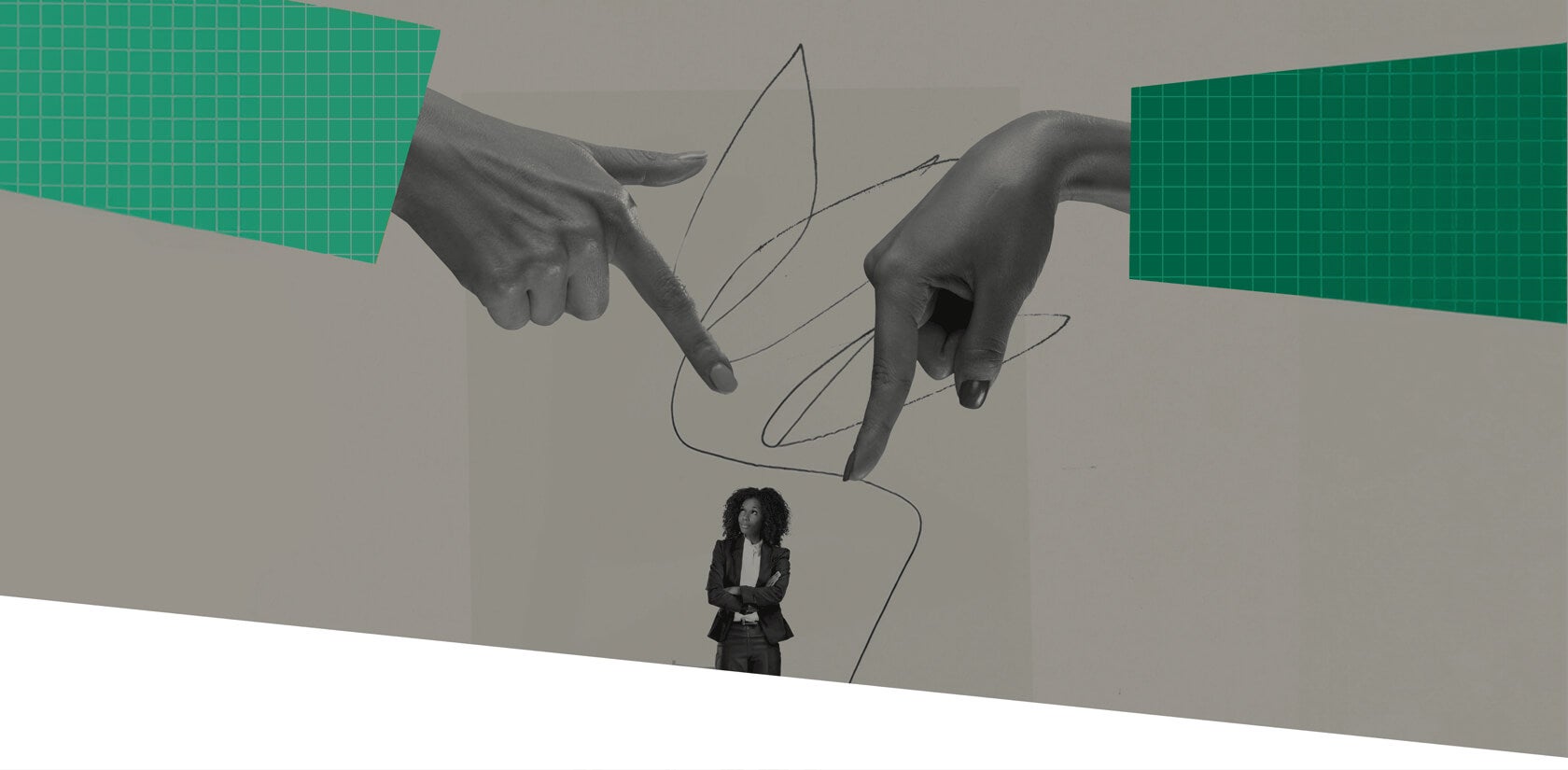
Now let me tell you the big truth about micromanagement that you might not know: the other person decides. What I mean is, we may not have it as our intent to micromanage. We may not think we're micromanaging, but the other person, if they feel like you are, then how are they labeling you as a micromanager? It's the receiver who decides if it's micromanagement, not the leader.
Jill Wiltfong:
With us now is Erika Duncan, Co-Founder of People on Point, an HR strategic advisory firm. Erika, thanks for joining me.
Erika Duncan:
Thanks for having me, I'm looking forward to it.
Jill Wiltfong:
Me too, so that last clip was from leadership expert Kevin Eikenberry, speaking about what actually defines a micromanager. So, Erika, talk about this dynamic. Is it micromanagement, even if that's not your intention, but if that's what your teams feel like you're doing?
Erika Duncan:
I think it comes down to perception is reality. So, there's a lot of reasons that someone can lead with that type of style, and they might not mean to be a micromanager, but it can be perceived that way. There might be real great reasons, productivity increases or quality control or a new person trying to be onboarded, those can be all great reasons for having a little bit tighter rein, but if the perception of the employees that they're being micromanaged or have a lack of autonomy, then that is their reality.
Jill Wiltfong:
Is there an example you can give of a time when you've had to step in with a micromanaging client to smooth things over and if so, like how did that go?
Erika Duncan:
So, I've had a situation where I backed up and what I'll call facilitated a conversation to say what kind of boundaries are we trying to set? What boundaries have we set and what boundaries have been perceived that we've set? And as you can imagine, those three things weren't all aligned perfectly. So, the boundaries that were set, you know, were coming from two different angles. From the manager saying here's why I am setting these boundaries and what I'm looking for out of them. And then the employee saying, here's the boundaries that I didn't used to have, I do now have, and here's how that feels.
Jill Wiltfong:
Nice, I love that notion of boundaries, right, it's almost like the label of micromanagement. If you can get rid of that and really just understand where everybody's coming from, even just removing that label probably solves a lot of the tension.
Erika Duncan:
It does and you know, sometimes you look at leadership styles regardless of if an office is remote or not, and some styles just are more macromanagement, right, and that's a term we don't hear a lot, but some people are just more, I guess inclined or kind of wired to say here's the goals, here's what we need to achieve and if you are achieving them, I'm less interested in how you're achieving them. And then you've got other leaders and sometimes industries as well who might have reasons to need or want to know more the how. So, it's not just here's the goals and did you achieve them, but the how becomes very relevant, it's effectiveness and I think that can be perceived as micromanagement. But I think again, some of it's explaining the fact that the how matters.
[“1984” Movie]:
- 30 to 40 group, take your places please. Right, let's see which one of us can touch his toes. Right over from the hips, brothers and sisters please. One, two. One, two. One, two. One, two. Smith, 6079, Smith, W. Yes, you, bend over. You are not trying.
Jill Wiltfong:
That was a clip from George Orwell movie classic, "1984." Erika, it's doctor's notes and keyboard trackers now. But do you see things getting worse and worse until we reach some sort of big brother or if you will, Orwellian situation like we saw in the clip there?
Erika Duncan:
I personally don't think that, I think at some point we run into places where people just don't feel comfortable with that level of maybe, I don't want to say visibility, it's more about feeling surveilled. So, I believe that the intent is really a balance of trying to understand what productivity looks and feels like to encourage productivity and really to hold accountable and be able to celebrate those that are. So, it just depends on how you're looking at it. But I don't believe that we'll end up getting into, you know, a full-on big brother situation. But I do understand that people are certainly navigating what the new normal is and probably will continue to.
Jill Wiltfong:
That's great, Erika, thank you so much for sharing your thoughts here today.
Erika Duncan:
You're welcome.
Jill Wiltfong:
The Executive Producer of "Briefings" is Jonathan Dahl. Today's episode was produced by Rupak Bhattacharya, Nadira Putri, and Teresa Allan, and edited by Jaron Henrie-McCrea. It contains reporting by Russell Pearlman, Arianne Cohen, and Peter Lauria.
Our video segment contains original artwork by Frazer Milton, Hayley Kennell, Jonathan Pink, and Sasha Kostyuk.
Don't forget to read our magazine, available at newsstands and at kornferry.com/briefings. That's it for Korn Ferry's "Briefings". I'm Jill Wiltfong. We'll see you next time.
Dan Kaplan:
Now you're going to see my belly, is that better?
Subscribe to series:




Podcast Guest
Dan Kaplan
Senior Client Partner, CHRO Practice
Korn Ferry
Dan brings over 20 years of expertise in leadership and organizational consulting to the firm. He has advised CEOs, investors, boards, and high-profile industry leaders on a wide range of issues impacting the talent landscape.

Podcast Guest
Erika Duncan
Co-Founder & Human Capital Advisor
People on Point
Erika's organization optimizes HR/People outcomes through creative design of people (HR) systems and processes. Among other things she is an expert on, she also advises founders and CEOs on compensation and equity structures.