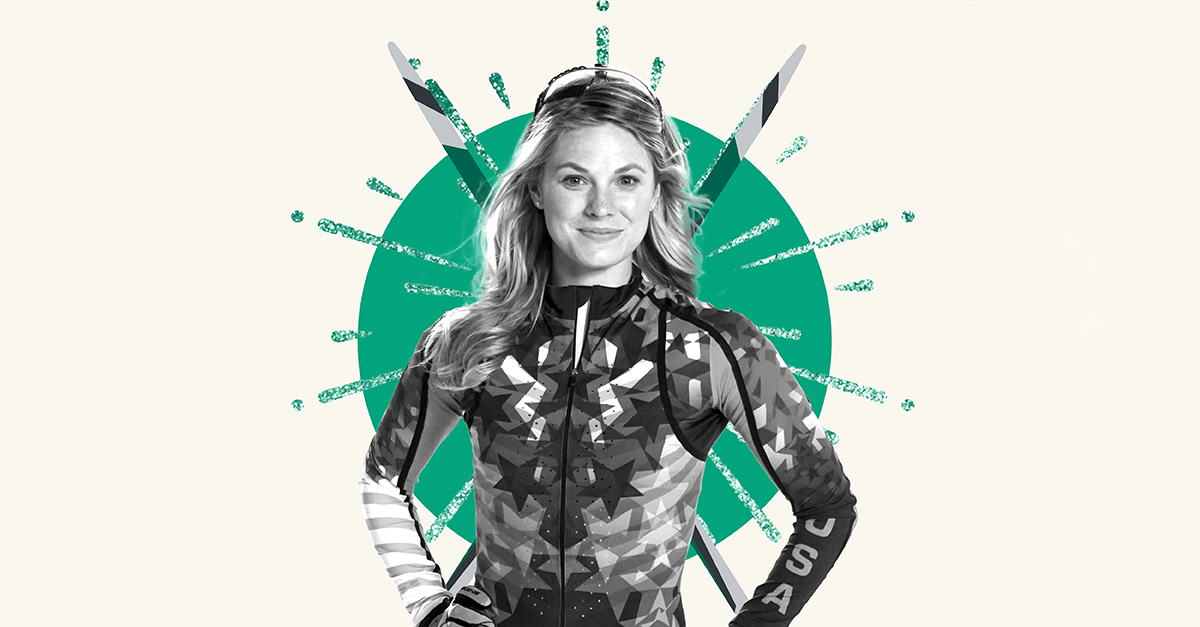
The Myth of Peak Performance
Many S&P 500 companies are beating earnings estimates, but should leaders think workers can repeatedly peak? The author of a new book on the topic and an Olympic silver medalist discuss a better way forward.
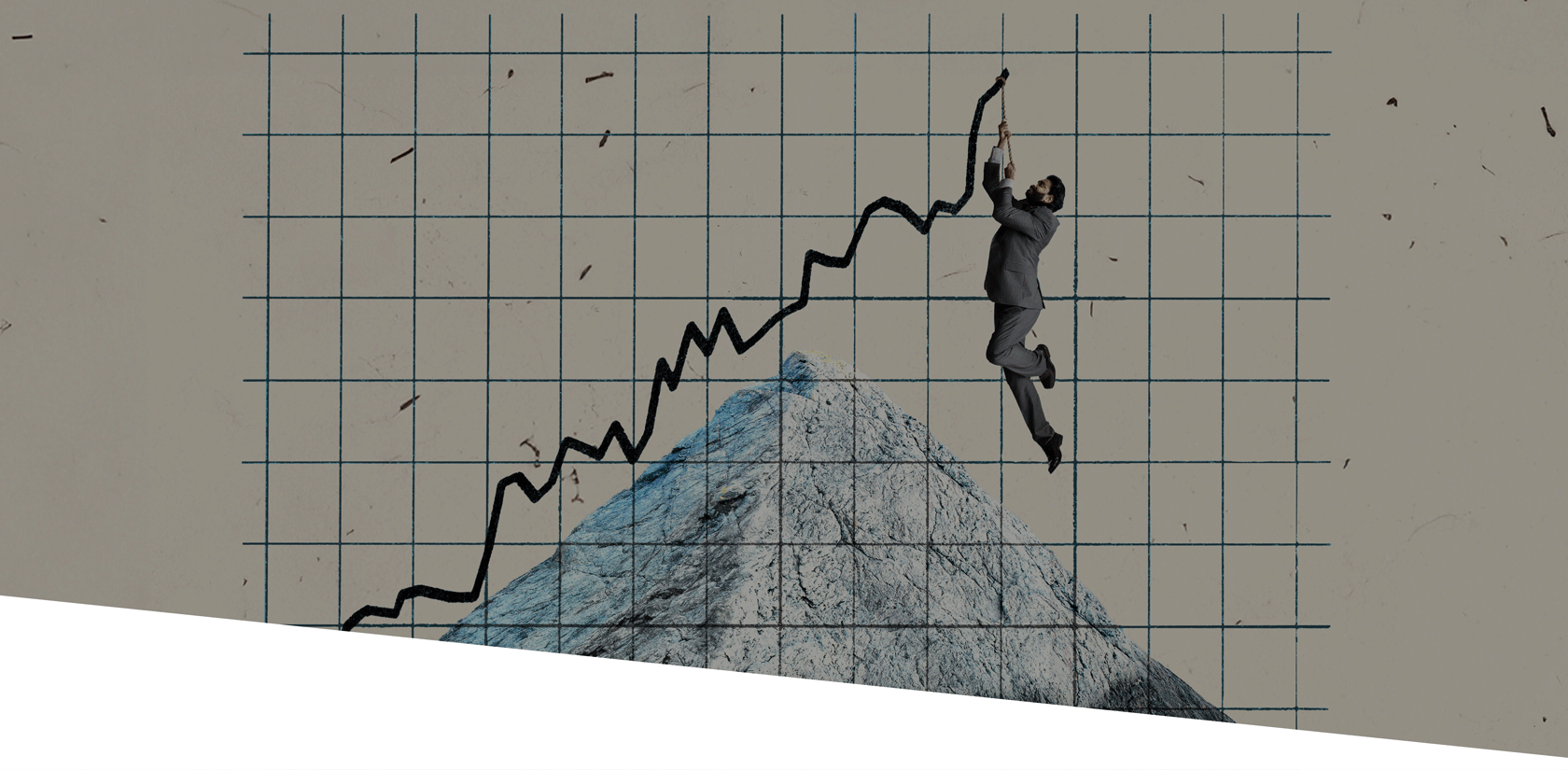
The Myth of Peak Performance
NOTE: While this transcript has been reviewed, it may contain errors. Please review the episode audio before quoting from this transcript.
Jill Wiltfong:
The myth of peak performance.
Daniel Goleman:
It's one where you're fully focused, time seems to stop, feels great. Here's the problem, you can't make it happen.
Jill Wiltfong:
What's different about motivating teams?
Mark Richardson:
You want the team to have ownership. You've got to get skin in the game. It's all about peaking for those championship moments, in the might strain to burnout territory.
Jill Wiltfong:
Are there any tips on how we can turn that around?
Daniel Goleman:
You get pelted with small toy animals.
[Employee 1]:
You wanted to talk?
[Manager 1]:
Yes. Congratulations. You've hit our peak target for the week.
[Employee 1]:
Well, it took years off my life, but I hope it was worth it.
[Manager 1]:
Yes, of course. Now let's do it again next week.
[Employee 1]:
Huh?
[Manager 1]:
We're just getting started and we want to keep the momentum going, right?
[Employee 1]:
Yeah, yeah, yeah. Of course.
[Altogether]:
That's the spirit.
[Employee 1]:
Well, it took nights and weekends, but I got it done.
[Manager 1]:
Yes. Yes. Totally incredible. You peaked again.
[Manager 2]:
Same thing next week, right?
[Employee 1]:
See, the thing is, I geared up to perform that way, but I can't really keep up that kind of-
[Manager 3]:
Keep up? What do you mean keep up?
[Employee 1]:
Never mind. Let's hit that peak again.
[Altogether]:
That's the spirit.
[Employee 1]:
Well, we did it. We peaked again.
[Altogether]:
That's the spirit.
Jill Wiltfong:
Hi, this is Jill Wiltfong, Chief Marketing Officer for Korn Ferry, and this is Briefings, our deep dive into leadership. When we last looked, more than 80% of S&P 500 companies were beating their quarterly earnings estimates, but the pressure to keep up this level of performance may be taking a serious toll on workers. A recent study of roughly 10,000 full-time desk-based workers across six countries found that over four in ten, almost half, said they're burned out. It's a problem that keeps getting worse. So, what can leaders do about all of this workplace weariness? Do they simply stop expecting employees to perform at their absolute best each day? What if I told you the answer is yes? Today we explore why as we unpack the myth of peak performance.
Let's start with someone who's researched and written extensively about this topic: Dan Goleman, Psychologist and Author of New York Times Bestseller, "Emotional Intelligence." His new book, "Optimal," was the inspiration for our discussion today. Dan, it is a pleasure to have you on.
Daniel Goleman:
Jill, it's my pleasure. Thank you very much.
Jill Wiltfong:
When it comes to top performance, Dan, you've talked about the so-called Flow State that many of us have heard of and the perhaps less well-known optimal state. How do you define each of those and what's the difference between the two?
Daniel Goleman:
Well, flow was discovered by researchers at the University of Chicago who asked people, tell us about a time you outdid yourself. It was like your best performance ever. They asked ballerinas, chess champions, basketball players, neurosurgeons, all kinds of people, and it turned out that the interstate was always the same, no matter what the domain. It's one where you're fully focused, time seems to stop, you feel great. However, here's the problem with flow. You can't make it happen. It comes, it's as though you're graced. It happens to you.
Jill Wiltfong:
You in the past have talked about research out of Harvard Business School, which followed 12,000 journals that professionals kept every day that logged their feelings about their work life. How did that work lead you to develop this connection between employees reaching this optimal state and better outcomes for companies?
Daniel Goleman:
What we found was that when people were having a great day, that optimal day, companies were happy and they're happy because they're getting the results they want, because people are performing at their best. So, it's really two different lenses on the same optimal performance.
[“The Matrix” movie]:
How? He's the one.
Jill Wiltfong:
That's a famous scene from "The Matrix," where Keanu Reeves' character, Neo has his peak moment and realizes his full potential, but that's something too hard for many people to do every day. And Dan, your new book says that emotional intelligence, something you popularized two decades ago, is actually the key to being your best every day. Can you speak to how that works? I want to reach my optimal state. So how do we actually get there?
Daniel Goleman:
One of the easiest ways, the best paths into the optimal state actually is concentration, focus, bringing your full attention to what you're doing right now and in the brain that has two effects. One is you do your best work when you're fully focused, you're not distracted. The second is the same part of the brain calms you down so you're calm and clear and you're performing at your best. So, it's not like taking a pill like in the movie and being at your best. It's something we each can do to help ourselves get into that good state.
Jill Wiltfong:
Interesting, so are there strategies that leaders can implement to help employees really strengthen that ability to focus? Are there some tricks to that?
Daniel Goleman:
Well, I would say the first thing you can do as a leader is use your own self-awareness. How are you getting results? You're driving people. Tune in, use some empathy, and see how you're behaving as a leader. Because I've asked people around the world, tell me about a boss you hated and a boss you loved. Tell me one quality that made them so good or so bad, and basically the boss people love tunes in, is empathy is supportive, inspires them and manages their own emotions well, essentially that's emotional intelligence.
[Rob Cross]:
The modern workplace is set up with so many ways to foster collaboration. Meetings and brainstorming sessions, Zooms and slack channels, email, instant messaging, so many tools to help us work closely together and aspects of this are great, but we're doing more collaborative work than ever before. And the problem is it's overloading us.
Jill Wiltfong:
That's collaboration pioneer and author Rob Cross talking about how teamwork can often be less productive than we'd like these days. Dan, you've cited research that shows that teams can have kind of a group level emotional intelligence, and it's important to establish emotionally intelligent norms or behaviors to get the most out of group interactions. Do you have any examples of what these norms might look like in a collaborative workplace setting?
Daniel Goleman:
Absolutely, of course, this comes from the work of Vanessa Druskat, who's looked at the high performing teams for decades now, and what she means by norm is an agreed-on way of behaving. And one of the norms, for example, might be, we're going to listen people out instead of talking over them or interrupting them. And at one branch of a creative consultancy ideal, if you break that norm, you interrupt someone, you get pelted with small toy animals. You know, it's just a fun way of reminding people, “hey, oh yeah. Right. I'm breaking that norm.”
Jill Wiltfong:
Dan, thank you so much for sharing your insights with us. I do want to make sure people can get your book. The title again is, "Optimal: How to Sustain Personal and Organizational Excellence Every Day." Dan, can you tell us where we can grab that book?
Daniel Goleman:
That book is everywhere there are books sold, including online, you can go to my website, danielgoleman.info, I-N-F-O to find out more.
Jill Wiltfong:
Perfect. Thanks for being here today.
Daniel Goleman:
My pleasure. Thank you.
Jill Wiltfong:
We've heard about philosophy and research beyond optimal performance. After the break, we'll speak to an Olympic silver medalist sprinter who will give us the inside track, pun intended, on what it takes to perform your best both on the world stage and at work. Stay tuned.
Rupak Bhattacharya:
Hi, and welcome to the break. I'm Rupak Bhattacharya, and here's a quick look at what else is happening in business from Korn Ferry's This Week in Leadership.
[News]:
The weight loss drug boom has created a battle over coverage.
Rupak Bhattacharya:
43% of organizations say they will cover weight loss drugs this year up from the 25% that already do, but with companies already facing a five to 8% jump in healthcare costs this year, experts say coverage policies for weight loss are likely to vary widely across companies.
[News]:
Very, very powerful, very intelligent, artificial intelligence is coming.
Rupak Bhattacharya:
A new study shows that one third of employees across all age ranges say they've received better career advice from artificial intelligence than from their managers. Among Gen-Zers, almost half feel that way. Experts say this may stem from the lack of interaction between employees and managers due to remote work.
[Participant]:
Where do we stand with the state of remote work right now? Because it seems kind of messy.
Rupak Bhattacharya:
In yet another wrinkle to return to office mandates, a new study indicates that high performing employees are twice as likely as average employees to consider leaving an employer that imposes a strict return to office policy. Leaders continue to say they see overall productivity increases when workers are in person, but still need top performers to lead the way. For more insights on business and leadership, head to kornferry.com/insights. Now, back to Jill and our episode on The Myth of Peak Performance.
[Reporter]:
There's been a lot said and written about the four meters in the last couple of weeks and you've probably been sitting there reading it because you've sneaked in nice and quietly to be unheralded, but within a great chance of a medal here, if the injury stands up.
[Mark Richardson]:
It's great for me. There's no pressure on me at all. Only the expectations I put on myself and people who know me well. So, you know, I've got very high ambitions here and hopefully they'll come true.
Jill Wiltfong:
With us now is Mark Richardson, a Korn Ferry Senior Client Partner who focuses on culture transformation and top team performance and who also happens to be an Olympic silver medalist. Mark, thanks for joining me.
Mark Richardson:
It's an absolute delight. Thanks for having me.
Jill Wiltfong:
Of course, that last clip featured you hot off a great performance on the track at the 1997 World Championships. For races like those, you obviously strove for peak performance, right? Your absolute best. Can you talk to us a little bit about how you achieved that in training? Did you pace yourself so that you are at your very best during the actual competition or is there some other trick to making that happen?
Mark Richardson:
Yeah, high performance sport, particularly something like track and field athletics. It's all about peaking for those big moments, those championship moments, and you start thinking about what's the training cycle needs to be? How do you manage your intensity, how do you optimize your workload so that you are creating the conditions both physically and mentally to be at your sharpest and at your best when you most require, i.e. in the final, hopefully.
Jill Wiltfong:
Very good, we just heard from a leading researcher who says that especially in business organizations, it's better not to strive for peak or what some people call flow state performance because it's unpredictable, can be unsustainable. And basically, he's saying you can't try to win a silver medal every day. Instead, his research is saying leaders should encourage what he calls optimal performance, meaning basically using emotional intelligence to make sure that workers have a good day every day. Did you find that you had to change what top performance meant when you went from this sporting world into a business environment?
Mark Richardson:
Yeah, actually, I think there's lots of similarities and crossovers. So, I might change the language slightly and start using the term self-regulation. So, what I notice about high achievers, actually in business or in sport, they have the ability to self-regulate. And by that their emotional intelligence, they have that emotional awareness to understand what their capacity is and how you best optimize and manage it so that actually you can show up and be at your best more consistently.
[Al Pacino – “Any Given Sunday” movie]:
Now, I can't make you do it. You got to look at the guy next to you, look into his eyes. Now I think you're going to see a guy who will go that inch with you. You're going to see a guy who will sacrifice himself for this team because he knows when it comes down to it, you are going to do the same for him. That's a team, gentlemen. And either we heal now as a team, or we will die as individuals.
Jill Wiltfong:
That's a rousing speech delivered by Al Pacino that I think many of us know quite well in the movie "Any Given Sunday," as he tries to motivate his team to win. Mark, in the business world, when it comes to pushing teams to be their best, how does that approach differ from simply trying to motivate one person? What's different about motivating teams?
Mark Richardson:
I don't think leaders can motivate people because for motivation to be long lasting and true, it needs to come internally. So how do they create conditions where their people feel inspired? How do they create the conditions where their people feel as if the investment of their time and their energy, which is going to be significant, is toward, is pointed towards something, is going to make a difference, a difference to what? And the more that you can amplify that, the more that you can create this sense of identity round that, then actually you create the conditions whereby people will start to really challenge each other. They'll expect brilliant performance, they'll demand it of each other, and that's when you've got a really strong high performing team.
Jill Wiltfong:
Mark, this has been quite a journey, this whole concept around peak performance, how it may really be about pacing yourself, whether it's to win an Olympic medal or just deliver on a project. Mark, where do you keep that medal? I'm curious. Where is it hanging in your house?
Mark Richardson:
Yeah, it's not hanging, it's in a really dull place. It's in an overly practical case on a chest of drawers in our bedroom. So, yeah, super dull.
Jill Wiltfong:
Well, congratulations on that and congratulations to all of us that get to learn from you, from that experience. Thanks for being with us here today.
Mark Richardson:
Thanks for having me. It's been great.
Jill Wiltfong:
The Executive Producer of "Briefings" is Jonathan Dahl. Today's episode was produced by Rupak Bhattacharya, Nadira Putri, and Teresa Allan, and edited by Jaron Henrie-McCrea. It contains reporting by Russell Pearlman, Arianne Cohen, and Peter Lauria.
Our video segment contains original artwork by Frazer Milton, Hayley Kennell, Jonathan Pink, and Sasha Kostyuk.
Don't forget to read our magazine, available at newsstands and at kornferry.com/briefings. That's it for Korn Ferry's "Briefings". I'm Jill Wiltfong. We'll see you next time.
Mark Richardson:
What trophies are those, Jill? Excuse my ignorance.
Jill Wiltfong:
Oh, Emmy Awards and-
Mark Richardson:
They're actually Emmy Awards?
Jill Wiltfong:
Yeah, yeah, yeah, yeah.
Mark Richardson:
Wow.
Jill Wiltfong:
Not an Olympic medal.
Subscribe to series:




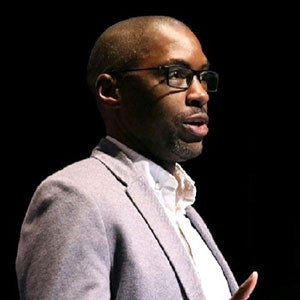
Podcast Guest
Daniel Goleman
Psychologist, New York Times Bestselling Author & Science Journalist
Dan is a famous author of Emotional Intelligence. He transformed the way the world educates children, relates to family and friends, and leads and conducts business.
Podcast Guest
Mark Richardson
Senior Client Partner
Korn Ferry
An ex-Olympic 400m medalist and world champion athlete, Mark brings a unique understanding of high-performance psychology, behavioral science and decades of experience working within and helping to develop organizations where engagement and success are inevitable.