Did Supply-Chain Pros Forget Something? Oh, Right: People
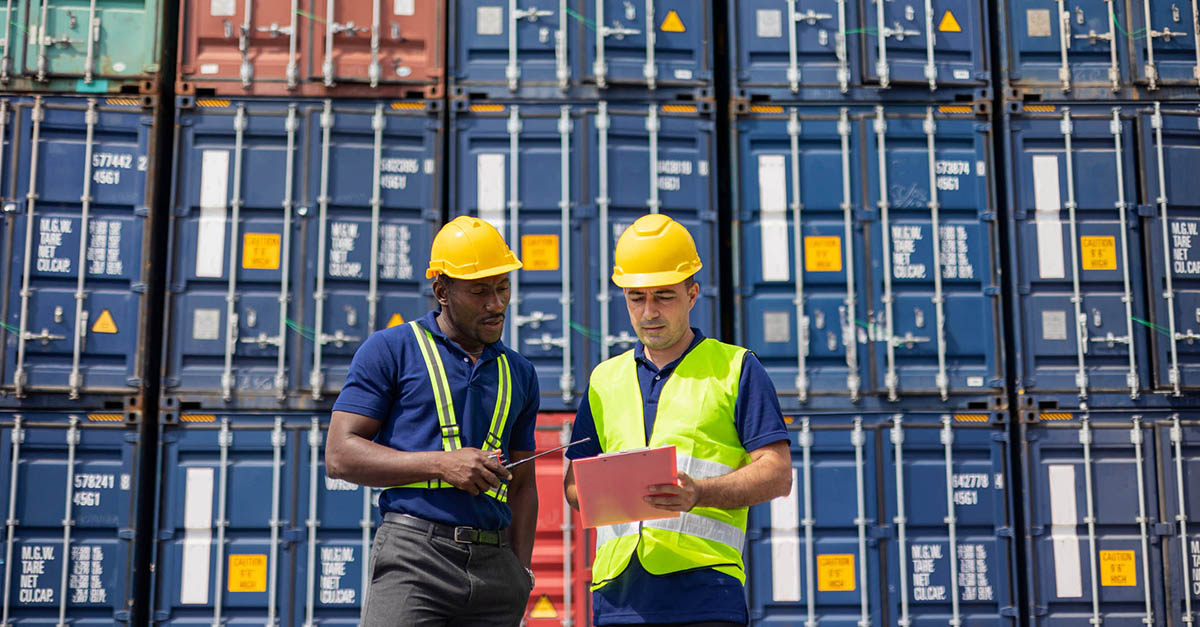
In a shift on priorities, just 12% of global corporate supply-chain goals include focusing on people skills and safety.
During the pandemic, leaders thought day and night about their people, pondering everything from retention to benefits. Employee well-being became a boardroom priority, and organizations invested heavily in mental-health resources, flexible work arrangements, and unprecedented support systems. This year, that feels like a lifetime ago.
Especially if you’re part of a firm’s supply-chain operations. In a result that’s shocking even in this age of dwindling corporate empathy, a survey of 700 of the world’s largest companies reveals that just 12% set supply-chain goals focusing on staffer needs, such as development and safety. Indeed, according to the study, which was conducted by the World Resources Institute, just 3% have committed to improving working conditions or investing in worker skills. Experts say the data reflects a key weakness in a critical operation, even as companies face a host of challenges, from tariffs to global conflicts. “Goals don’t implement themselves,” says Mark Royal, senior client partner at Korn Ferry. “Companies are clearly setting themselves up for implementation problems.”
To be sure, experts say it’s not unprecedented for companies under pressure to neglect people in operations in order to pursue data-based goals. But in other specialties like sales or research, top talent and training are always part of the conversation. More importantly, the omission of people dovetails with a broader corporate shift away from a pandemic-era focus on employees and toward imminent AI operations. Only 20% of global CEOs and board directors prioritize employee engagement as their top leadership priority for the next three years, according to Korn Ferry figures, compared to nearly 70% who rank tech and AI skills as their top areas of focus. Experts warn that this continued emphasis on AI and tech over humans may backfire.
Discussions about supply chains do naturally tend to center around sourcing and sustainability. “Supply-chain goals are full of things that fit neatly in spreadsheets: cost, carbon, throughput,” says Marnix Boorsma, senior client partner at Korn Ferry. “People rarely make the cut,” he says, because their contributions are difficult to measure and their costs are trickier to defend in a boardroom slide deck.
The culture and corporate positioning of supply-chain teams is also an issue. In recent years, supply-chain leaders have been more likely to be temporarily appointed. “It’s increasingly seen as a rotational role,” says Cheryl D’Cruz-Young, senior client partner in the Sustainability and Global Energy practice at Korn Ferry—particularly for someone en route to a top job. Teams are also exceedingly price focused. “They’re typically all about reducing costs, so they rarely invest in themselves,” says D’Cruz-Young. As a result, many firms have not kept up with employee training—which experts say is problematic at a time when supply chains have grown exponentially more complex, both in and of themselves and also in terms of their technologies.
Without the right people, supply-chain teams will invariably find themselves constantly “putting out fires,” says supply-chain expert Gregor Fiabane, senior client partner at Korn Ferry. “They find themselves flat-footed with every new tariff and change.” Supply chains are now seen as a C-suite strategy topic and competitive differentiator, and today’s supply-chain excellence requires AI fluency, enterprise-leadership ability, and the collaboration skills required to see diverse perspectives as fresh ideas rather than conflict.
Experts advise reframing supply-chain woes. Sure, they’re always an organizational headache—but they’re also increasingly a competitive differentiator, providing opportunity after opportunity for companies to leap ahead of flat-footed peers. Experts suggest providing team members with a mix of core functional technical skills, complemented by the leadership skills that enable delivery and execution. “Difficult sustainability goals can be achieved, but it’s through these softer skills, like collaboration, that you achieve them,” says D’Cruz-Young. “Our worry is that the focus is no longer there.”
Learn more about Korn Ferry’s Supply Chainconsultingcapabilities.