The (Office) Party's Over?
One in three people find office work events a total bore. A leading culture expert and one of America’s top partsay planners explain how to bring back the fun.

The (Office) Party's Over?
NOTE: While this transcript has been reviewed, it may contain errors. Please review the episode audio before quoting from this transcript.
Jill Wiltfong:
The holiday office party season is soon upon us.
Mark Richardson:
In terms of corporate culture, it's so important.
Jill Wiltfong:
Why office events have apparently become a turnoff. 35% of employees can't stand office gatherings.
Susan Mactavish Best:
Do you wanna go to an office event at 5:01 and have bright fluorescent lighting? Definitely not.
Mark Richardson:
Inviting people to be part of the conversation has gotta be a good thing.
Jill Wiltfong:
Is the office party as we know it over?
Susan Mactavish Best:
Anyone can buy a bagel.
Rupak Bhattacharya:
Welcome to the Friday Night Office Party coming to you live from the bar. Let's see how the event is shaping up. First thing we notice is that the quarterback, our chief executive, hasn't arrived yet. That's not a great start people. Well, let's see what we've got lined up for food.
Wait a minute, I think we may have a flag on the play. Let's look at the replay.
Pizza. Well, that is just shocking, folks. You just don't expect to see that from a team of this quality.
Anyway, let's go to the bench and see who's getting warmed up. Goodness knows they need a replacement here. Wow, the chemistry on this team is weak. People are just standing apart. It's like they forgot all the plays.
Speaker:
Does anyone even go to those things anymore?
Rupak Bhattacharya:
Wait a second. One, two. Hey, there's actually only like six people here.
Speaker:
I rest my case.
Jill Wiltfong:
Hi, this is Jill Wiltfong, Chief Marketing Officer for Korn Ferry. And this is Briefings: Our Deep Dive into Leadership.
Today we're looking at why office events have apparently become a turnoff for many workers. Holiday parties and group lunches out used to be the bedrock of a strong company culture, but a recent poll out of the U.K. found that 35% of employees can't stand office gatherings claiming that they're boring or a waste of time. But if they're becoming snooze fests that's actually a serious blow to the office culture, leaders are trying to rebuild in this post pandemic world and culture matters to the bottom line.
Two thirds of top executives in fact attribute 30% of their firm's market value to culture. It begs the question, is the office party as we know it, over?
Here today to speak with me on this intriguing topic is Susan MacTavish Best. She's the founder of a wildly successful salon business called Posthoc as well as the Salon Host and she has twice been named one of America's top 100 party hosts.
Hi Susan, thanks for joining me.
Susan MacTavish Best:
Hi, Jill. Thank you for having me.
Jill Wiltfong:
Susan, talk to me a little bit more about office parties and where you think we're going wrong. There are Bagel Mondays and Taco Tuesdays and ping-pong tables. Is it all wrong?
Susan MacTavish Best:
Well, that just doesn't sound very interesting. I mean, maybe that's interesting for someone who just graduated from college, but no, actually I don't think Gen Z wants to go do that. I don't think that folks who are organizing the events perhaps are using enough creativity when they're trying to gather their employees.
The way I think of hosting events, and we call them salons. It's quite specific what we do at our organization is that we look at them as being a mini festival for the senses. Start at 7:00 p.m, go on for a few hours, but it's gonna smell good, the lighting's gonna be great, there's gonna be live music, there's gonna be a really interesting conversation and people are gonna dress up. It's fun.
Jill Wiltfong:
Yeah, it is that. Probably the same thing you do with clients, right? Is you wanna provide this money-can't-buy experience and probably anybody can buy a bagel.
Susan MacTavish Best:
Anyone can buy a bagel, but not anyone can go reach out, figure out who the fantastic violinist is. I'm using this as an example 'cause we did this two weeks ago in New York where I went and found a fellow who had a Stradivarius and his Stradivarius had been stolen out of his hands and so he performed on his Stradivarius and told the story. That's something money really can't buy. It took creativity on my part to go find that person.
Speaker:
Understand that there are tiers in the office party hierarchy. There are those above you.
Let's call them tier one. There are your equals. Tier two. There are those below you. Tier three. Understanding your place in this hierarchy is key, but you should know this going in. If you don't, you're hopeless and none of these matters.
Jill Wiltfong:
Susan, that's a comedic bit on office parties from Vanity Fair. Has social interaction today just become too awkward?
Susan MacTavish Best:
I think the way events are being set up is too awkward. I don't think they need to be too awkward. Look, when we host a salon, I don't think it's awkward at all. We set it up so that it's not awkward. First of all, when you walk in the door, it's, as I said earlier, a festival for the senses. It's gonna smell good. The lighting is great.
Look, do you wanna go to an office event at 5:01 and have bright fluorescent lighting? Definitely not. No one looks good. We all look exhausted.
Jill Wiltfong:
Yeah, you certainly run some wonderful salons for workers. I think you even had Sean Penn; did I hear correctly come to one of them recently?
Susan MacTavish Best:
Yes, yes, yes, we did. And you know what the best thing was? He looked around and said, "This is what I'm doing from now on. When I have people over to my home, I'm just not having them for drinks or a dinner party, but I have a topic." And it helps actually for people who get a little nervous to go to an event.
If there's something to talk about specifically or if there's sort of a theme, and I don't mean like a 1920s theme, but if you're having an office event and maybe one of your clients has an amazing story or has just published a book, your CEO could interview that person about the book. That was a takeaway with Sean Penn was that there was sort of a reason to gather people.
Jill Wiltfong:
Yeah, besides from having Sean Penn, which I think we all could probably benefit from and having this topic, this theme, what are some other things that companies can learn from what you're doing?
Susan MacTavish Best:
I really like having someone to speak to or to learn from. So perhaps it's a famous chef or a local famous chef. Someone in your neighborhood has a new book that's out. Someone is an artist and a musician. It might be one of your employees, it might be one of your clients, it might be one of your partners. Get them to come in and perform. Support your community and then you're building your community. And really, you're building a community of influence around your business. That means your business is going to do better. Your employees are gonna be more loyal to the business.
Jill Wiltfong:
I think there's a lot, a lot, a lot of inspiration here. Susan, based on the events certainly that I've been to, I think we've picked up some good tips here today. Where can people go to get more information on how to create an inspired gathering?
Susan MacTavish Best:
Sure. Well, our company, Posthoc, Posthoc Salons is at posthoc.com. And then for others 'cause we can't host everyone's event obviously, but we really wanna encourage people to be building community around their own organizations is an educational resource we launched during COVID called thesalonhost.com.
Jill Wiltfong:
Thank you so much for being here. Appreciate it.
Rupak Bhattacharya:
Hi, I am Rupak Bhattacharya and welcome to the break. Here's a quick look at what else is happening in the world of business from Korn Ferry's This Week in Leadership.
Speaker:
If you are manufacturing in Mexico, you can get that product to the U.S. consumer in under 24 hours in a truck. If you are manufacturing in Asia, it's gonna take you two to six weeks.
Rupak Bhattacharya:
In a trend known as nearshoring, more companies have started moving production pipelines closer to key markets for greater stability. Experts say the pandemic exposed supply chain vulnerabilities such that 9 in 10 executives say they're exploring or have already explored moving operations closer to home.
Speaker:
Talking on the phone can be terrifying. You'll put in extra effort just to find a way around it.
Rupak Bhattacharya:
Recent surveys show that fewer people are making phone calls. A reported four out of five millennials get anxiety just thinking about making a call with 21% likely to avoid calls from work altogether.
Speaker:
Getting Britain back to work, but is it a case of can't work or won't work?
Rupak Bhattacharya:
In a slightly surprising finding, a new study from the Policy Institute at King's College London shows that 73% of Britains claim that work is very or rather important in their life. That's the lowest figure among 24 nations.
For more insights on business and leadership, head to kornferry.com/insights. Now, back to Jill and her episode on "Is the Office Party Over?"
Jill Wiltfong:
So, we're back and we're talking about how to make office gatherings more engaging for employees. I'm now joined by Mark Richardson, a Korn Ferry Senior Client Partner in our Organizational Strategy and Culture Transformation Practice. He also happens to be an Olympic silver medalist.
Mark, welcome.
Mark Richardson:
Thank you so much.
Jill Wiltfong:
Let's talk a little bit about office events and corporate culture. Why are the two linked?
Mark Richardson:
In terms of corporate culture, it's so important to create a sense of meaning, harmony, and connection. So, if you can create the conditions whereby oxytocin's flying around the organization so people feel this deep sense of affinity, identity, and belonging, then it's much more likely that your culture is gonna be high functioning and it's gonna help you to deliver on your strategy.
Carin Taylor (Chief Diversity Officer at Workday):
I've been doing diversity work for a really long time and a few years ago there was a new term that was actually introduced into the diversity arena. And it was this term called belonging. If you want people to thrive, create the conditions for belonging.
Jill Wiltfong:
That's Workday's Chief Diversity Officer, Carin Taylor, speaking to the need for companies to create a sense of belonging. That survey out of the U.K. that I referenced earlier had one in five workers, Mark, claiming that social events were not in inclusive of people from underrepresented groups.
What can leaders do to make sure that everyone comes away from work events feeling, as Carin said, like they belong?
Mark Richardson:
Yeah, it's an interesting challenge. I think that the original kind of construct of workplace events links to after office hours, perhaps linked to a drinking culture as well, and just how relevant is that?
Who was that designed for? So how can you make them feel inclusive, co-create them. Give voice to your people, understand what's gonna be true and it is necessary for them to feel a sense of connection, for them to feel as if they can be part of something. For some cultures, drinking isn't allowed, it's prohibited. So how do you take all of that construct and all of that richness into consideration to shape something that's truly going to be inclusive that's built with inclusion in mind and designed for from the outset?
I think that's the answer.
Jill Wiltfong:
Many workers, of course, have children or elders to tend to, so attending an office event outside of work hours might lead to childcare, elder care, expenses, and stress. Is there something, Mark, that companies can do to help on that front?
Mark Richardson:
Yeah, well, you gotta take it into consideration. I think awareness is curative. So of course, there's additional responsibility. It's our paramount. And does it have to be outside of working hours? So how do you meld the two? So of course, what you don't wanna do is create other pressures and tensions in terms of workload. But I think giving voice to that, helping people to understand, well, here are some of the considerations, helps us to make skillful choices in this way.
And inviting people to be part of the conversation has gotta be a good thing. And that in itself is co-creating and helps to spark engagement.
Jill Wiltfong:
I love this notion of consideration. Inclusion, consideration, empathy, all really, really important I think, as we try to surround people, connect with them and celebrate with them as well.
So, you've certainly given me a lot to consider when planning my next work social. So thank you, Mark. I appreciate it.
Mark Richardson:
Thank you so much.
Jill Wiltfong:
The Executive Producer of "Briefings" is Jonathan Dahl. Today's episode was produced by Rupak Bhattacharya, Chelsea Starks, Nadira Putri and Teresa Allan and edited by Jaron Henrie-McCrea. It contains reporting by Russell Pearlman, Arianne Cohen, and Peter Lauria. Our video segment contains original artwork by Frazer Milton, Hayley Kennell, Jonathan Pink, and Sasha Kostyuk. Don't forget to read our magazine available at newsstands and at kornferry.com/briefings. That's it for Korn Ferry's "Briefings." I'm Jill Wiltfong, we'll see you next time.
Subscribe to series:




Podcast Guest
Susan MacTavish Best
CEO
Posthoc, Inc.
Founder of POSTHOC, which hosts salon gatherings where she interviews the world’s experts in an intimate setting with guests from across generations, viewpoints, industries, and backgrounds. She is an expert at building communities.
Podcast Guest
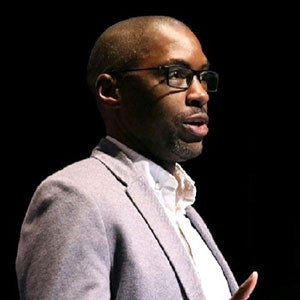
Mark Richardson
Senior Client Partner
Korn Ferry
An ex-Olympic 400m medalist and world champion athlete, Mark brings a unique understanding of high-performance psychology, behavioral science and decades of experience working within and helping to develop organizations where engagement and success are inevitable.